 You will hear a lot about capital growth when you are looking at properties to buy for investment and it’s often used as a selling tactic from agents to highlight attractive elements of a property. It’s something to make sure that you are aware of as although it is a key element that you should consider, it is important to do your own research when it comes to evaluating the capital growth of properties (and the areas they are located in). Capital growth is basically the increase in value of your property (or portfolio) over time and is an element that you should consider alongside the property’s yield (which is the amount of income divided by the amount borrowed against the asset, which I’ll discuss in a later post). No agent has a crystal ball that can predict future capital growth no matter how much they might want to make you believe they can see into the the future. Commonly, agents and property commentators state that a property will double in value every 7-10 years. In an ideal financial climate this can be the case but it’s dependent on a huge variety of things such as employment rates, local development, government investment and desirability of the area to name just a few. Take a look at my post on Detroit so see an extreme example of where these factors come into play to the detriment of capital growth.
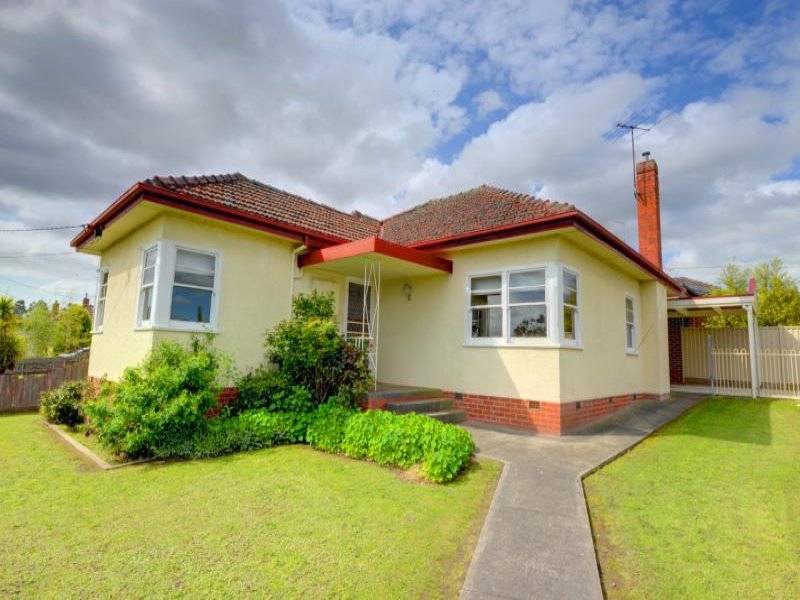
If you are familiar with an area over a lengthy period of time you can often start to develop your own understanding of the capital growth likely for properties in the region. An example that I would like to share came to my attention this week with the listing of the house that belonged to my grandparents (and was built by my grandfather!). Having spent a considerable amount of time in this house myself and literally living around the corner from it for 18 years I certainly know this area well. This property was sold around 15 years ago for less than $100,000 AUD which was a typical price for a property of it’s type at the time (a bargain price in anyone’s books nowadays!) Since then the property has only had one owner and has also been subdivided with another house being built on the rear yard and subsequently sold off. The original property is now for sale for $248,000 AUD which sits perfectly with the theory of doubling in value every 10 years (and probably then some considering that the block it is on is only now half the size). It’s a good example of becoming familiar with an area and I’d strongly recommend that even when you are not at the stage of buying that you keep an eye on the progress of prices in an area that you are interested in. It’s a fascinating exercise and also can help you to be suitably informed when dealing with agents in the future.
Whilst this post is about the basic principle of capital gain I just cannot resist a walk down memory lane with such a familiar property. Feel free to stop reading here but if you like some good historic before and afters the photos below will be interesting.
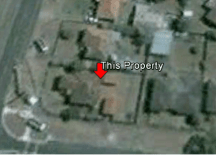
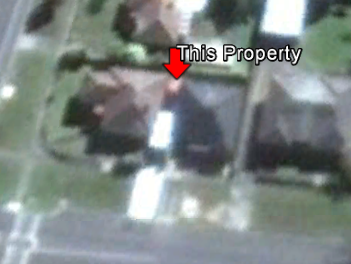
Below are the before and after satellite views of the property (2006 & 2012)
These pictures show the subdivision and subsequent new house built on what was formerly the back yard. Being situated on a corner, properties such as this are often in demand from those that can see the value in utilising such a large backyard for further development.
…………………
And before and after photos from 50 years ago (thanks to my parent’s wedding album!)
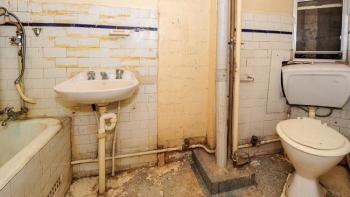
When looking through the current pictures it’s interesting to see that the only major internal change is the removal of much of the original carpeting and polishing the floorboards. It certainly gives a more modern look but the kitchen and bathroom are still original. Considering this, this capital growth is still very good!

 One of the most fascinating things that I’ve seen in the media recently regarding property development are the incredible ‘ghost cities’ that are being developed in China. The first I heard of this was in 2011 when Journalist Adrian Brown of the Australian Dateline program visited multiple new cities that had been built throughout China. The statistics are incredible with reports stating that there are over 64 million apartments vacant across the country. The background to why these cities have been built is intriguing and somewhat complicated. Many experts theorise that it has a lot to do with China’s tax policy. With no local property taxes, governments still need to make money so this is largely done through the development of land. With land sales being illegal in China this works by the government leasing large tracts of land for development of these massive estates, the scary thing is that this happens sometimes regardless of other services and infrastructure being there to support such large cities. Throw into this mix the emerging Chinese middle class with excellent savings records and a non-transparent stock market and investment in property is an attractive option for many, either as an investment for themselves or as a future home for a child. It’s reported that many people purchase their property with cash, and with no mortgage or property taxes to worry about it could be seen as a relatively easy investment to sit on. The results of this are evident however, just take some time and view the following footage, it’s astounding.
 One of the great things about starting the journey of property investing is that you don’t necessarily need to be on an enormous pay packet to do it. Many people assume that to invest in property you need to have a lot of money to start off with. I’m sure that many of us know of people who are making big bucks in their jobs but are still struggling come the end of the month to pay the bills and are sometimes heard saying ‘If only I had more money/got a pay rise/won the lotto’ etc… One of the key things to realise when considering investing is that it’s not how much money you have it’s how you manage the money that you do have that matters. Look at the examples that we hear about of people that do win the lotto. There are numerous unfortunate stories of people winning millions of dollars but just a few short years later they have gone through the lot and have nothing to show for it. Just simply having money doesn’t equal knowing what to do with it. Learning how to manage money (and not just in relation to property investing) is one of the key skills that I’d suggest is essential before embarking on any property investments.
 Whilst the title of this post is about becoming ‘intimate’ with money, what I mean by that is that it’s important to know as much as you can about your own finances and to learn to manage them rather than sit back and hope for the best. This isn’t about learning how to become a millionaire, it’s about knowing what you have, what you are doing with it and how you can start to make it work for you…hopefully the millionaire part comes later! For many people this step can be challenging, particularly if money is not something that you are used to discussing or learning about. For some, simply getting over the mental hurdle of ‘but I don’t earn enough to have to worry about it’ is the first step. My thought is that whether you’re a 10 year old putting pocket money in a piggy bank or an executive on a 6 figure salary you can always learn something new when it comes to managing your money. It’s also an ongoing process that you need to commit to as the way you manage your finances changes as you go through life. One thing that I’ve found (and I can feel eyebrows being raised in skepticism now) is that as you get better at it you will start to see the benefits of managing your money and it can change from what may have felt like a chore into something that can be enjoyable…you’ll have to trust me on that.
 Landlordism