- Share on Facebook (Opens in new window) Facebook
- Share on X (Opens in new window) X
- Share on LinkedIn (Opens in new window) LinkedIn
- Email a link to a friend (Opens in new window) Email
- Share on Tumblr (Opens in new window) Tumblr
- Share on Pinterest (Opens in new window) Pinterest
- Share on Reddit (Opens in new window) Reddit
Uncategorized
Is it cheaper to buy or rent?
The Main Types of Mortgage for Making a Property Investment

 If you want to make sure that you will be financially steady in your future (especially if you are going to retire in a fairly short amount of time), then you will have to start thinking of ways in which you can invest money now, to profit later on. Although the economic crisis has been tough on the real estate market, the truth is that this is still one of the safest things to go for when it comes to investments.
Making a property investment will most likely mean that you will have to take a mortgage loan as well. Before you make any move though, do make sure that you understand the various types of mortgage loans out there, because this can influence a lot whether or not your property investment will actually turn out profitable.
The first and most common type of mortgage is the fixed-rate one. This…
View original post 184 more words
Home vs investment property: What to buy first?

 You no doubt have been brought up believing that owning your own home is the ‘Australian thing to do”. Renting is just throwing away money and you need to buy your own home so you’ll be able to retire. So the usual steps goes something like this:
1 – Save up a deposit (with or without assistance).
2 – Purchase your PPOR (Principal Place of Residence).
3 – After you have built up equity in that home you consider either renting it out and purchasing a new PPOR, or you look at buying an investment property.
But is this the smartest move?
If you purchase your PPOR first, it can weaken your long-term financial position, because you have an increase in cost of living. It is highly likely it will cost you more to own your own home than to rent. Not just because of your mortgage, but through maintenance…
View original post 211 more words
The 10 commandments of property investing
Taking your first step – Doing the sums!
I was reading recently that less than 8% of the Australian population are property investors which equates to about 1.8 million people. Of these, the Australian Tax Office reported that 72% of these investors (or around 1.3 million) own just one property. There is a steep drop to less than 100,000 people that own more than 3 properties and less than 1% of Australian property investors (about 15,000 people in the entire country) own more than 6 properties. This information not only shows how few people manage to develop a large property portfolio but also that there is a huge proportion of people that never even get their foot on the ladder. Of course property investing is not everyone’s cup of tea but I have spoken with many people just wanting to make a start but possibly not feeling prepared to take the leap of faith. Today I was speaking with a family member who was interested in learning more about the steps to take to get on the investment ladder. I mapped out a basic example of what I would consider a great ‘starter’, something quite similar to what I started with on my first investment and also an investment which won’t break the bank to get you started. Let’s take a look.
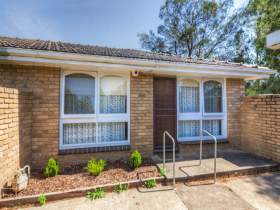 The property I chose to demonstrate with was a one bedroom unit currently for sale in a regional city of around 100,000 people. It is serviced well with good infrastructure and is close to necessary facilities (shops, hospitals, schools etc). The location is highly desirable and the unit itself appears to be in excellent condition. It is for sale for $145k – $155k. Let’s say that we manage to get an offer of $145k accepted, what do the figures look like and is it affordable?
| How Much Will It Cost Me? | ||
| Property Price – $145,000 | Deposit (10%) – $14500 | Mortgage – $130500 |
| Stamp Duty – $3700 | Interest Rate – 5.5% | |
| Conveyancing – $800 | ||
| Mortgage Insurance – $1800 | ||
| Total Costs (estimated) | $20800 |
These are the main costs with a deposit of 10%, if you can get to 20% for a deposit the mortgage insurance disappears and the total estimated cost would then be $33,500. So you could get the property for an initial outlay of between $20,800 and $33,500 but what then? How are you going to service the loan and how much is it going to cost out of your own pocket?
| How Much Will It Cost To Service? | ||
| Loan Amount – $130,500 | Council Rates – $900 | Rent Income – $200/wk |
| Interest Rate – 5.5% | Water Rates – $900 | |
| Weekly Repayments – $171 | Body Corp – $800 | |
| Property Mgmt. – $728 | ||
| Yearly Repayments – $8892 | Yearly Costs – $3328 | Rent/Yr – $10400 |
The rent on this property is very healthy and over the course of the year you would be out of pocket $1820 (or $35 a week). Remember that this is a ‘one moment in time’ scenario and things can change in both positive and negative ways. The interest rate above is fairly conservative currently, I could locate a deal at 4.69% which would reduce your weekly repayments to $156 meaning you’re now only out of pocket $20 a week! If you managed the initial 20% deposit at that interest rate then your repayments drop to $139/week which means you would have to dig between the couch cushions once a week to find the spare $3 to fund your investment property!
On the flip side you also need to be aware that tenants can move out, things can break that need repairing and the cost of rates, insurance and property management can (and usually do) go up. It would be great to only have to pay $3 a week but in reality it will sometimes be more than that. Can I afford $20, $50 or even $100 a week if it came to that? These are all questions that you need to ask yourself and factor into your own budget. Overall though, what I’m hoping is that this example shows that you don’t need to be a millionaire to start on the investment ladder. Yes it takes some saving but it’s property and you don’t get it for free. When you do the sums though it can often work out to be a lot less than you may have initially thought!
Tip 4 – Get Intimate With Money
 One of the great things about starting the journey of property investing is that you don’t necessarily need to be on an enormous pay packet to do it. Many people assume that to invest in property you need to have a lot of money to start off with. I’m sure that many of us know of people who are making big bucks in their jobs but are still struggling come the end of the month to pay the bills and are sometimes heard saying ‘If only I had more money/got a pay rise/won the lotto’ etc… One of the key things to realise when considering investing is that it’s not how much money you have it’s how you manage the money that you do have that matters. Look at the examples that we hear about of people that do win the lotto. There are numerous unfortunate stories of people winning millions of dollars but just a few short years later they have gone through the lot and have nothing to show for it. Just simply having money doesn’t equal knowing what to do with it. Learning how to manage money (and not just in relation to property investing) is one of the key skills that I’d suggest is essential before embarking on any property investments.
For a lot of people talking about money is simply not something that is done. It could be for many reasons be it cultural, historical or just something ‘not done in our household’. For some people discussing money might be seen as rude or obnoxious (and I’m sure in some cases it is) but think about the reasons why it’s worth discussing. I’ve read comments by several authors on personal finance regarding the lack of money management that is taught in schools. Maths, science and english are staples in many a school curriculum but what about finances, budgeting and investment? For many adults we need to either choose to learn about these things or (as unfortunately many people do) cross our fingers and hope that the lotto win comes though. Whilst I still get the occasional lotto ticket I’m not relying on the one in several million odds to get me to where I want to be. The choice to learn about managing your own money should be a simple one (and I hope for you it is) but unfortunately for a lot of people it still falls into the too-hard basket. If you’re still reading, let’s assume that it is something that you are keen to learn more about. Remember, there is a big difference between someone talking (and learning) about how to manage money in order to do it well versus someone simply talking about how much money they have!
 Whilst the title of this post is about becoming ‘intimate’ with money, what I mean by that is that it’s important to know as much as you can about your own finances and to learn to manage them rather than sit back and hope for the best. This isn’t about learning how to become a millionaire, it’s about knowing what you have, what you are doing with it and how you can start to make it work for you…hopefully the millionaire part comes later! For many people this step can be challenging, particularly if money is not something that you are used to discussing or learning about. For some, simply getting over the mental hurdle of ‘but I don’t earn enough to have to worry about it’ is the first step. My thought is that whether you’re a 10 year old putting pocket money in a piggy bank or an executive on a 6 figure salary you can always learn something new when it comes to managing your money. It’s also an ongoing process that you need to commit to as the way you manage your finances changes as you go through life. One thing that I’ve found (and I can feel eyebrows being raised in skepticism now) is that as you get better at it you will start to see the benefits of managing your money and it can change from what may have felt like a chore into something that can be enjoyable…you’ll have to trust me on that.
I have learnt a lot about managing money over many years but I’m the first to say that I still have plenty to learn. Let me finish this post with a few of the most important financial management lessons that I learnt that have really stood out to me.
- Start learning to save. This seems like a simple lesson to learn but it’s one of the hardest to start putting into practice. Whatever pay packet you receive there is always scope to start saving but in a world where we all want the newest things yesterday holding onto that money can be difficult. This link to the Moneysmart website will provide some useful tips as well as a nifty savings goal calculator.
- The difference between good and bad debt. This is an important lesson when it comes to investing in property as debt is a key part of it. The difference between the two is significant though. Basically, one is debt for an asset that goes up in value and one is dept for an asset that loses value. Think a house vs. a new car. See what Oprah has to say about it here, although I don’t think she needs to worry too much about money…
- Beware of credit cards. We all have one (or several) and they are a part of life but its amazing how credit card debt can have a huge influence on an individua’ls personal finance. Learning to live and manage credit cards is crucial for everyone with some plastic in their wallet. Check out this credit card calculator and see how long it takes to pay it off. The example below could apply to a lot of peole.
There are innumerable financial lessons to learn when it comes to managing your own money. If you’ve got some that you found beneficial share them below!
 Landlordism