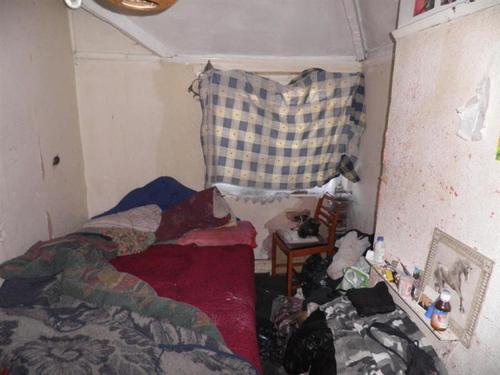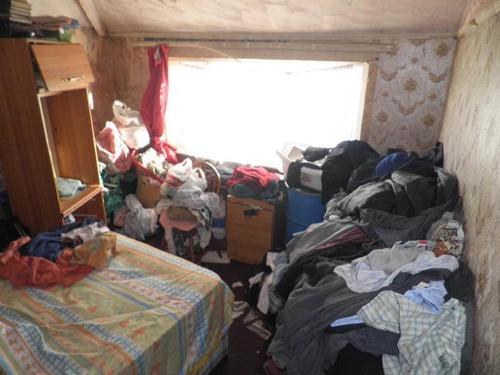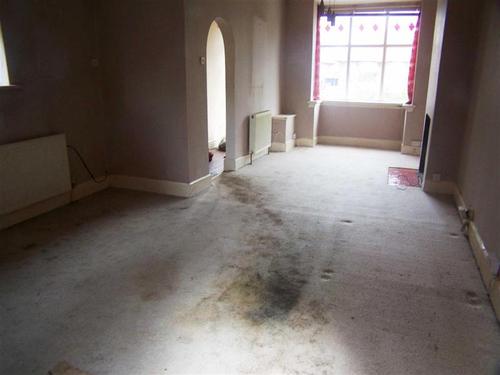
Terrible real estate agent photos

One thing that you’ll certainly find when you’re looking at property are the ‘creative’ ways that they are often marketed, particularly on the internet. Many of us have raised a skeptical eyebrow when reading descriptions such as ‘cosy’ (read: shoebox size), ‘renovators delight’ (read: recent drug lab explosion) or ‘convenient location’ (read: airport adjacent). Although a tempting description can lure you in initially it’s a different story when it comes to images of the property. For the most part agents tend put in suitable effort into getting photos that show off the best features of the property…there are exceptions to every rule though! Thanks to my friend David for alerting me to Terrible real Estate Agent Photos that highlight some shining examples of what not to do when selling a property.

Room1 Room2 room3

China’s amazing ghost cities

ChinaOne of the most fascinating things that I’ve seen in the media recently regarding property development are the incredible ‘ghost cities’ that are being developed in China. The first I heard of this was in 2011 when Journalist Adrian Brown of the Australian Dateline program visited multiple new cities that had been built throughout China. The statistics are incredible with reports stating that there are over 64 million apartments vacant across the country. The background to why these cities have been built is intriguing and somewhat complicated. Many experts theorise that it has a lot to do with China’s tax policy. With no local property taxes, governments still need to make money so this is largely done through the development of land. With land sales being illegal in China this works by the government leasing large tracts of land for development of these massive estates, the scary thing is that this happens sometimes regardless of other services and infrastructure being there to support such large cities. Throw into this mix the emerging Chinese middle class with excellent savings records and a non-transparent stock market and investment in property is an attractive option for many, either as an investment for themselves or as a future home for a child. It’s reported that many people purchase their property with cash, and with no mortgage or property taxes to worry about it could be seen as a relatively easy investment to sit on. The results of this are evident however, just take some time and view the following footage, it’s astounding.


The first report is the original from 2011 whilst the second is a follow-up that was broadcast recently in 2013. The third report from 60 minutes Australia gives a slightly different view on the development of China from the perspective of an Australian architect employed to work on the redevelopment projects. The final clip from 60 minutes US is also really interesting. I find the entire thing absolutely amazing and I’m continuing to find more and more information regarding this unique situation an entire country finds itself in. I’ll be fascinated to see how this develops over the next 5, 10 or 20 years.

Looking around LA

I think I’d find it almost impossible to come to LA and be surrounded by so much real estate without getting out for a bit of a look. So today in sunny West Hollywood I consulted Google Maps and off I went. Whilst I would have loved to have gone up into the hills to stroll through mansions my lack of car (and multiple millions of dollars) kept me local. I selected 2 properties to view, one on the ‘If I won lotto list’ and the other was on the ‘this could be doable one day’ list. Let’s start with the home that would use up my lotto winnings.

Described as a Stunning 3 bed, 3.5 bath town home with superb finishes located near the famous and trendy Melrose Place, I’d certainly be thrilled to call this place home. At just under 1.5 million it’s not cheap, but for the location in West Hollywood and the amazing property I’d be thinking this is good value. Huge bedrooms, great bathrooms and a large outdoor area help finish off the 1 year old 2250sq foot 2 level condo.

This slideshow requires JavaScript.

Although the agent was assuring me that the US property market is well on the rebound I had the luxury of looking through this amazing property by myself for almost 45 minutes. I get the feeling that the level of confidence in the local property market may not be quite as positive as he indicated, or maybe all of the movie stars were off filming today. So I then packed up my bags and headed west to the other end of West Hollywood, literally the other side of the street to Beverley Hills.

This cute bungalow below is situated in an area known as the Norma Triangle and was built in 1922. This was the more realistic property I wanted to inspect, with 2 beds and 1 bath it is quoted at $787,000. OK, maybe not amazingly cheap but half the price of the previous one…and it comes with your own recording studio (formerly known as a garage). It had a completely different feel to the other property being much more homely. A fantastic hedge rose 10 feet as your front fence which appears very common in LA and looks great. There was also a nice backyard to relax in after your exhausting recording sessions. I’ve asked both of the agents to get back to me with what their rental estimates would be, I’ll be interested to see what percentage return you get.

This slideshow requires JavaScript.

I’d always recommend having a look at properties in other countries if you get a chance whilst travelling. I find it not only very useful to get an idea of what you can get for your money but also fascinating to see how others live!

The value of Landlord’s Insurance

One thing that property investors can sometimes discover the hard way is the importance of ensuring that they have adequate landlord’s insurance on their investment properties. When things are going well and you have a great tenant who looks after the property and pays their rent on time it can be an easy thing to overlook and can often be avoided because of additional cost. I’ve discovered through personal experience and listening to the experiences of others that it is an essential component in every investor’s bag of tricks.

Yes it is an additional expense (although if you do your research you can get some good deals) but it is worth its weight in gold if things go pear-shaped (and it’s tax deductible). One of the other traps that property investors can fall into is assuming that the building insurance on the property automatically covers them for landlord and tenant associated issues, this is not always (and often rarely) the case. Make sure that you are familiar with what your building policy does and does not cover. The benefits of landlord’s insurance come into their own if there are issues with rental payment defaults and malicious damage to the premises. Give it some thought, what expenses would I have if a tenant doesn’t pay their rent, intentionally damages the property or even if they move out and leave the house full of their unwanted junk? It could really add up. Then consider, what happens if there ends up being a couch on the roof, old mattresses up a tree and old underwear in the garden…the mind boggles but it does happen! To see an example of when you would definitely want to ensure your landlord’s insurance policy was up to date (although somewhat extreme) check out the recent example below from Melbourne.

http://youtu.be/wMM0gJXzj_k

Video via 7 news

Tip 3 – What do you want to achieve?

thinkingWhen considering investing in property it’s essential to think carefully about why you are doing it and why you are choosing to invest in property over any other options. There is a lot of media coverage in many countries about the process and benefits of property investing and it’s certainly encouraging to a lot of people, however there are many questions that you should be asking yourself before heading down that path. One of the things I talk to people a lot about is to be ‘cautiously receptive’ of other people’s advice (including mine as well) and when you start telling people that you are thinking about buying an investment property you’ll be surprised at how many people have an opinion on it and plenty of advice to go along with it.



Ultimately, you are the only one that can decide if it’s the right option for you and your circumstances and this requires every potential investor to hold up a mirror and ask themselves some questions. Here are a few prompts that I found (and still continue) to find useful when considering buying a property for investment.

  • What do I want to get out of investing in property? Am I approaching this as a long term investment that I’m happy to maintain for years to come, or am I dong this for some fast returns?
  • Am I aiming to establish a portfolio of properties or am I going to buy one property for investment? If I’m aiming for multiples, how do I do that?
  • Do I want my investments to eventually be my primary income? Am I aiming to have it as a ‘retirement fund’ or eventually extra spending money?
  • Will I be disappointed if it takes a long time for me to see some positive cash flow from my investment? What if it starts off losing money?
  • Examining my finances, am I in a position to invest in property…realistically? Have I been putting off investing because I think I may not be able to do it financially?
  • Do I want a ‘set and forget’ investment or am I prepared to put time and energy into my investments? I think this question is very important to be able to answer as property can end up being either of those things.
  • How much do I know about being a landlord and how much time am I prepared to put into the process of learning about it?
  • Am I realistic about how I would manage if something goes wrong? What about if my income drops, if my family circumstances change, if I need to pay for major repairs or if I have issues with a tenant?

These questions are just a starting point for things to think about and all before you have been to an open for inspection. Often the first thing people will do when thinking about property investment is to go looking at properties and quickly fall in love with their dream investment. My view is that this can often be the first mistake in a long line of potentially costly steps. Remember, this is an investment and you need to be clear about what you want to achieve before you find yourself signing a contract of sale! Yes, it’s not the exciting part but it is essential. Being clear about your goals through investment will be one of the best first steps you can take and will certainly help pave the way for a successful journey. Try not to be put off by it, sometimes it’s challenging to put the brakes on and ask yourself such questions and you also need to be prepared to deal with your answers. If you don’t like what the answers are then it means that you need to do some more work before you get out there buying a property. It’s entirely worth it though so persevere!

If you are starting to think about investing or already are, what are the questions that you would recommend? What have you found useful to consider? Add them below!

More about Detroit

At the end of my post yesterday regarding the incredibly cheap properties in Detroit I finished off by asking ‘What’s the catch?”. The videos below provide a very good overview of the issues facing the city right now and particularly how it is reflected through property prices and urban decay. It really is a very sad situation that the city finds itself in and I’d encourage you to watch a few of the reports below, particularly the last one that examines the decline of Detroit through the eyes of the local city firefighters.

Spare some loose change???

If you’ve been watching the news over the last few weeks then you may have seen the unfortunate news about the city of Detroit in the US going into bankruptcy. It’s estimated that the city is in debt to the order of $18 – 20 billion. When looking into the history of Detroit and it’s decline over the years it’s fascinating to see the effect of the auto industry and the impact it had when things went offshore and downhill. In the 1950’s Detroit had a population of over 1.8 million. Between 2000 and 2010 it’s stated that the population dropped by over 25%. From the height of the 50’s it’s now estimated to be just over 700,000. The impact that this has had on real estate is on one hand amazing but on the other most likely disastrous. Below are a few currently listed properties that you could pick up for a steal. Click on the pictures to see more.

  • Det1Last sold in June of 2004 for $59,000, this 3 bedroom house that is close to 100 years old has dropped by an astonishing 93% and is now on the market for $4000, yes you read it correctly, $4000! With the agent’s website listing a potential rent of $742 a month I can’t say I’ve ever seen a property with the potential to pay itself off in 12 months. It does awaken the skeptic in me though…let’s explore some more.
  • Det2If you’ve got a few more dollars to spend then this following property may be of more interest at $12,000. It’s also got 3 beds and 1 bath but by the looks of it could do with a bit of work. Also, these houses could be in any type of area but this one does come with a virtual tour. I’m afraid that the music accompanying the pictures doesn’t add an awful lot.
  • The final one here I think is really pretty stunning considering what you can get when choosing to spend a Det3 more significant amount of money on a property. With 4 beds and 2.5 baths it’s amazes me that for $50,000 you can get what looks to be a completely livable home with spectacular grounds. The street-view on the website looks great…what’s the catch?

There are plenty of catches I’m sure with the purchase of any property in a once thriving city which has halved it’s population, is filing for bankruptcy and has an unemployment rate of around 16%. A simple investigation into property in Detroit will reveal that there are thousands of empty homes throughout the city and that the council has struggled to provide basic services due to over half of Detroit’s property owners failing to pay their tax bills. It’s a sorry state of affairs and one can only hope that a city such as this can recover.

Tax time help

The start of July can begin a confusing time for property investors in Australia with the end of the financial year, particularly if you’re new to being an investor and this is your first tax return with an investment property involved. As with all things to do with investing you’ll find that every man and his dog will have advice for you on what you can and cannot claim and how to squeeze every cent out of your tax return. Whilst this advice can often be good, and I’d encourage everyone to try and learn from the experience of others, the ultimate decision of what you can claim against your tax return lies with the friendly folk at the Australian Taxation Office (ATO).

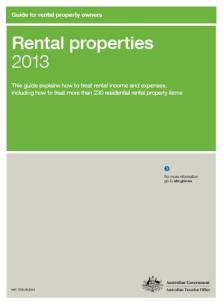
untitled

Whilst I was sitting in front of the computer recently pulling together the figures for this year’s tax return I happened to stumble across the 2013 guide for rental property owners published by the ATO. It’s a fairly big document but I found it to be a really useful guide and it had some great lists and examples of what you can claim and how you go about it. It also covers things that you would need to consider should you end up selling an investment time at any stage such as Capital Gains Tax.

Let me know what you think!

The mysteries of depreciation

One of the things that has taken me a long time to understand when it comes to investing is property depreciation and how it works with your income and particularly around tax time. I just sat through a webinar this evening (note my previous post about being willing to learn and becoming a student again) and it reminded me how challenging it was for me to get my head around it but also how beneficial it was once I knew about being able to utilise property depreciation to claim ‘non-cash’ deductions on your investment property come tax time.

In a nutshell it basically means that the cost of the property itself (both the building and the fixtures inside it) decrease in value over time, essentially it’s talking about wear and tear over the years. In Australia (I’m not sure about other countries) the tax office allows for legitimate deductions taking into account this decrease in value of the property and it’s fixtures each year. In the webinar it was stated that as much as 80% of investors are not claiming as much as they could be on these non-cash deductions each year. I certainly realised this a few years ago when I had a full depreciation schedule done on one of my properties. I was pretty pleased when the report outlined the amount that I could claim. The thing is however that you need to get a qualified quantity surveyor to prepare the report as that is all the tax office will accept. You’ll need to spend some time looking around to find the right person to do this for you. Don’t hesitate to compare and ask several surveyors about what they can do and the costs associated.

I’d certainly encourage all investors new or old to learn more about depreciation and how it can apply to your own circumstances, it can make an amazing difference to what you can claim against your investments and potentially a nice improvement on your tax return. The YouTube video below is from an Australian company (the ones that conducted the webinar) and I’d say is worth a look. This company is just one of many and I’d encourage you to look around and find one that suits your own needs.

Tip 2 – Become a Student!

learnOne of the things that you will find when you start investigating property investment is that there is a huge amount of information out there for you to digest. A lot of it is good and it’s great to know that there really are people willing to share their own knowledge to help you learn, alternatively there are also people willing to put out information that can unfortunately be misleading or are trying to make a quick dollar from the uninformed. The only way to know what to do is to learn it and frustratingly this takes patience. I’m a big believer that property investment is a journey and that it takes time, a lot of time. If you’re expecting to make big money quickly through buying and selling property for a profit then you’re heading more along the lines of property speculating rather than property investing. Some people may argue with me and that’s OK, I certainly won’t disagree that some people have made their fortunes out of speculating, but it’s not what this blog is about. This blog is about discussing the elements that you need to invest for the long term and to set yourself up for a prosperous future. The first step for most of us will be to accept that to do it we’ll need to ‘become a student’ again and go back to the books.

When I started out thinking about buying a property for investment I can freely admit that I knew absolutely nothing about what to do or how to go about it. Years later I’d like to think that I know a whole lot more and that this knowledge has put me in a much better position to manage and continue to improve my portfolio. That being said I’ve also come to understand that I will never know it all nor should I expect to. The property investor that thinks they know everything that there is to know is entering dangerous territory. So I guess you could say that the first lesson I learnt is that to do it well I needed to learn how to do it. If you are starting the journey then you’ll also need to figure out how to learn more about the ins and outs of investing. Being well informed is the best tool that you can have when starting out and you need to commit to developing this knowledge. As they say – A fool and his money are soon parted – becoming informed will make property investing an enjoyable and much less stressful pursuit and will hopefully help you avoid becoming the proverbial ‘fool’.

Once you start on your path to learning all about it you’ll quickly realise that there are huge amount of resources out there to digest and that it can be confusing. You’ll come across books, magazines, websites, blogs, conferences, seminars, clubs and organisations just to name a few. One of the ways I tend to approach all of this information is to sift it out by asking myself “What’s in it for the person giving me this advice?”. I started off by reading books, lots of books. Whilst some of the information was confusing and contradictory, I felt that for the most part, all the author of the book had to gain was the money from me buying the book. On the other hand, it takes a lot to get me to sign up for a seminar being run by a business spruiking the wonders of property investing. yes I’m cynical but I think a healthy dose of it in investing is a good thing. Also realise that you’ll be learning a new language. It took me a long time to start to understand the words and phrases used in property and I’m still learning. Try not to be put off by this however, it comes with time.

So if you’re just starting out, start out by becoming informed. Commit yourself to learning as much as you can and you’ll be giving yourself a great footing for a rewarding journey in property investing. If you are not willing to put in the time to learn about the ‘how to’ then I’d suggest that you might consider something else, as I’m sure that for every successful and well informed investor there are as many, if not more, that went into things uninformed and have come off second best. One useful place to start is to investigate the resources page where I’ll highlight some of the things that helped me start my journey. Whilst I found many of them useful you may not, keep looking and you’ll be sure to find the information that works for you.