REIA response to Renovating Housing Policy

logoFollowing on from my post this week regarding the Grattan Institute Report on housing policy it’s not surprising that the Real Estate Institute of Australia (REIA) has responded quickly to the recommendations in the report. Published this week on the Your Investment Property website is the following article outlining the response from the REIA. Once again it’s always fascinating to see the debate it stirs up in the comments posted after the article. You can access the original article here, or, read below.

Hands Off Negative Gearing, Warns REIA

A report issued earlier this week slamming government housing policies has provoked a strong reaction from the Real Estate Institute of Australia (REIA), which said a recommendation to scrap negative gearing is ‘short-sighted’.

The REIA said it agrees with the Grattan Institute Renovating Housing Policy report in that a major overhaul of housing policy in Australia is needed, but disagreed with what needs to be done.

“We strongly agree with the report’s recommendations to eliminate stamp duties, however it’s essential negative gearing be retained in its current form for the purpose of property investment,” said REIA president Peter Bushby

“REIA has always supported negative gearing because it helps in the provision of rental accommodation. Negative gearing for property investment is complementary to the goals of the Government’s Housing Affordability Fund (HAF) in addressing the supply of rental accommodation.”

Bushby said removing negative gearing would show that Australians ‘haven’t learnt anything from history’.

“When negative gearing was abolished in 1985 it had disastrous consequences for the property market and for people trying to rent. Rents rose 37% across Australia and by 57% in Sydney.

“Thankfully, negative gearing was reinstated in 1987. It is far too short-sighted to link investor interest in housing to negative gearing alone. Negative gearing is only one of a range of factors that contribute to the level of investment in property. Other factors include interest rates, availability and accessibility of finance, share market performance, the unemployment rate, housing supply and consumer confidence.”

Bushby said the ‘myth’ that negative gearing is a plaything of the well-heeled also needs to be dispelled. He claims the majority of taxpayers with negatively geared property earn less than $80,000 per annum.

“Findings in the Renovating Housing Policy report are important and let’s hope they assist in kick-starting a debate on housing policy. With the new government, expectations that industry will be involved in finding workable solutions to these old issues are high.”


http://www.yourinvestmentpropertymag.com.au/article/hands-off-negative-gearing-warns-reia-180767.aspx

An agent with bling!

Thanks to everyone who is sending me ideas and great pieces for the blog. My wonderful sister who also loves a bit of property investment herself sent me this great advertisement for a property currently for sale in South Australia. I’ve heard people comment about getting their money’s worth out of their estate agent and the vendors of this house have done particularly well with theirs. I can’t envisage a lot of agents out their singing and dancing (even if pretty badly) to sell a property but good luck to him, it’s certainly unique!

Renovating Housing Policy

mza_8623053361525323846.170x170-75The Grattan Institute was formed in 2008 as an ‘independent think tank’ intended to develop public policy for Australia. This week there has been a lot of media commentary about a publication by the institute addressing housing policy in Australia. Renovating Housing Policy was published on October 20th and states:

This report looks at our complex housing system as a whole. By quantifying the major government outlays on the private housing system, it reveals the cumulative impact of housing policies both on individual choices of where and how to live, and on productivity and inequality in our cities.

The initial part of the report examines some fascinating trends and demographics related to home ownership in Australia, there is interesting data presented on the change in home ownership rates over the last 100 years as well as examination of current ownership rates by age as well as earnings. It then continues on to look at renting in Australia and it is from here that the information presented starts to become increasingly relevant to property investors. There is also significant focus within the report looking at the different government support provided to property owners versus those who rent a home. The report states that support for residential property investors costs $6.8 billion a year,or about $4,500 per year for each investor household. If you want to skip to the really interesting part though I’d suggest heading straight to page 36 where the recommendations commence. There are three main recommendations looking at stamp duty and property tax, reform of tax incentives for property investment and also reform of the private rental sector.

Whilst I certainly don’t agree with all of the proposals there appears to be some strong evidence available to support the statements being put forward. What I have found interesting is the way that it has been portrayed in a range of media and particularly the comments that have been posted by readers. I’d be eager to hear people’s thoughts on this as it would have a significant impact on property investors should these recommendations be put into practice. Don’t be afraid to comment below! Click here to read the article.

You can also check out some of the following media articles, don’t forget to check the reader’s comments, it’s certainly stirred up some debate!

The Age property section – Domain

ABC News

The Herald Sun

Business Spectator

Your Investment Property Magazine

MoneySmartAu

Moneysmart-compassThanks to my good friend and avid reader of my blog Renee for reminding us of the great website  www.moneysmart.gov.au and also their Facebook page. The website is full of great (and sensible) suggestions and ideas looking at money management, borrowing, credit and importantly property investing just to name a few. It’s an Australian site but a lot of the information could be utilised wherever you may be living. The Facebook page poses regular questions to readers about their own thoughts on money management and contains some excellent (and provocative) discussions. Posted yesterday was the question ‘Do you think it’s easier to rent or buy a home?‘ Check it out and see what people are thinking. Is there a right or wrong answer to this question? The range of discussion suggests maybe not! There is also a MoneySmartAu YouTube channel that has a range of videos on some really useful money management ideas.

http://youtu.be/V7oGJgD8Re8

Taking your first step – Doing the sums!

I was reading recently that less than 8% of the Australian population are property investors which equates to about 1.8 million people. Of these, the Australian Tax Office reported that 72% of these investors (or around 1.3 million) own just one property. There is a steep drop to less than 100,000 people that own more than 3 properties and less than 1% of Australian property investors (about 15,000 people in the entire country) own more than 6 properties. This information not only shows how few people manage to develop a large property portfolio but also that there is a huge proportion of people that never even get their foot on the ladder. Of course property investing is not everyone’s cup of tea but I have spoken with many people just wanting to make a start but possibly not feeling prepared to take the leap of faith. Today I was speaking with a family member who was interested in learning more about the steps to take to get on the investment ladder. I mapped out a basic example of what I would consider a great ‘starter’, something quite similar to what I started with on my first investment and also an investment which won’t break the bank to get you started. Let’s take a look.

mainThe property I chose to demonstrate with was a one bedroom unit currently for sale in a regional city of around 100,000 people. It is serviced well with good infrastructure and is close to necessary facilities (shops, hospitals, schools etc). The location is highly desirable and the unit itself appears to be in excellent condition. It is for sale for $145k – $155k. Let’s say that we manage to get an offer of $145k accepted, what do the figures look like and is it affordable?

How Much Will It Cost Me?
 Property Price – $145,000 Deposit (10%) – $14500 Mortgage – $130500
Stamp Duty – $3700 Interest Rate – 5.5%
Conveyancing – $800
Mortgage Insurance – $1800
Total Costs (estimated) $20800

These are the main costs with a deposit of 10%, if you can get to 20% for a deposit the mortgage insurance disappears and the total estimated cost would then be $33,500. So you could get the property for an initial outlay of between $20,800 and $33,500 but what then? How are you going to service the loan and how much is it going to cost out of your own pocket?

How Much Will It Cost To Service?
 Loan Amount – $130,500 Council Rates – $900 Rent Income – $200/wk
 Interest Rate – 5.5% Water Rates – $900
 Weekly Repayments – $171 Body Corp – $800
  Property Mgmt. – $728
Yearly Repayments – $8892 Yearly Costs – $3328  Rent/Yr – $10400

The rent on this property is very healthy and over the course of the year you would be out of pocket $1820 (or $35 a week). Remember that this is a ‘one moment in time’ scenario and things can change in both positive and negative ways. The interest rate above is fairly conservative currently, I could locate a deal at 4.69% which would reduce your weekly repayments to $156 meaning you’re now only out of pocket $20 a week! If you managed the initial 20% deposit at that interest rate then your repayments drop to $139/week which means you would have to dig between the couch cushions once a week to find the spare $3 to fund your investment property!

On the flip side you also need to be aware that tenants can move out, things can break that need repairing and the cost of rates, insurance and property management can (and usually do) go up. It would be great to only have to pay $3 a week but in reality it will sometimes be more than that. Can I afford $20, $50 or even $100 a week if it came to that? These are all questions that you need to ask yourself and factor into your own budget. Overall though, what I’m hoping is that this example shows that you don’t need to be a millionaire to start on the investment ladder. Yes it takes some saving but it’s property and you don’t get it for free. When you do the sums though it can often work out to be a lot less than you may have initially thought!

Capital Growth: A Family Case Study

1You will hear a lot about capital growth when you are looking at properties to buy for investment and it’s often used as a selling tactic from agents to highlight attractive elements of a property. It’s something to make sure that you are aware of as although it is a key element that you should consider, it is important to do your own research when it comes to evaluating the capital growth of properties (and the areas they are located in). Capital growth is basically the increase in value of your property (or portfolio) over time and is an element that you should consider alongside the property’s yield (which is the amount of income divided by the amount borrowed against the asset, which I’ll discuss in  a later post). No agent has a crystal ball that can predict future capital growth no matter how much they might want to make you believe they can see into the the future. Commonly, agents and property commentators state that a property will double in value every 7-10 years. In an ideal financial climate this can be the case but it’s dependent on a huge variety of things such as employment rates, local development, government investment and desirability of the area to name just a few. Take a look at my post on Detroit so see an extreme example of where these factors come into play to the detriment of capital growth.

If you are familiar with an area over a lengthy period of time you can often start to develop your own understanding of the capital growth likely for properties in the region. An example that I would like to share came to my attention this week with the listing of the house that belonged to my grandparents (and was built by my grandfather!). Having spent a considerable amount of time in this house myself and literally living around the corner from it for 18 years I certainly know this area well. This property was sold around 15 years ago for less than $100,000 AUD which was a typical price for a property of it’s type at the time (a bargain price in anyone’s books nowadays!) Since then the property has only had one owner and has also been subdivided with another house being built on the rear yard and subsequently sold off. The original property is now for sale for $248,000 AUD which sits perfectly with the theory of doubling in value every 10 years (and probably then some considering that the block it is on is only now half the size). It’s a good example of becoming familiar with an area and I’d strongly recommend that even when you are not at the stage of buying that you keep an eye on the progress of prices in an area that you are interested in. It’s a fascinating exercise and also can help you to be suitably informed when dealing with agents in the future.

Whilst this post is about the basic principle of capital gain I just cannot resist a walk down memory lane with such a familiar property. Feel free to stop reading here but if you like some good historic before and afters the photos below will be interesting.

Below are the before and after satellite views of the property (2006 & 2012)

These pictures show the subdivision and subsequent new house built on what was formerly the back yard. Being situated on a corner, properties such as this are often in demand from those that can see the value in utilising such a large backyard for further development.

12

…………………

And before and after photos from 5years ago (thanks to my parent’s wedding album!)

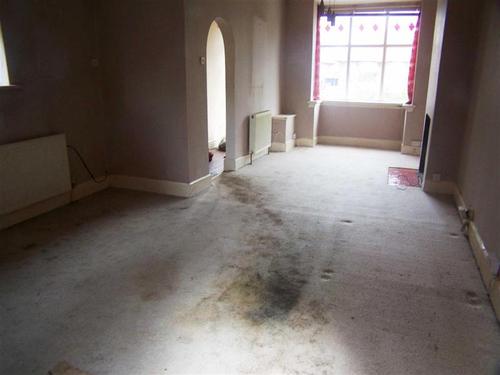
When looking through the current pictures it’s interesting to see that the only major internal change is the removal of much of the original carpeting and polishing the floorboards. It certainly gives a more modern look but the kitchen and bathroom are still original. Considering this, this capital growth is still very good!

This slideshow requires JavaScript.

Company Title vs. Strata Title

When looking to purchase property it can sometimes feel like you have to start learning a new language and it’s not that far from the truth. There are a lot of terms that you need to learn about and start to understand what they mean. As frustrating as this can be, it’s crucial to make sure that you can speak at least some of the language of real estate to ensure that you have a good idea of what you’re getting in to and that you can avoid being bamboozled by agents talking the talk. One term that you will hear a lot, mainly when there are multiple dwellings in a group (units, apartments etc) is Strata Title. Another one that you may hear less often is Company Title. Let’s look at this fascinating unit recently for sale that highlights the difference between Strata and Company Title.

PP1

This one bedroom apartment recently listed (and already under offer) in Sydney’s beautiful Potts Point has been shut up for the last 20 years and has not been lived in for all of that time. 20 years ago similar units to this were selling for around $75,000, in 2013 however it’s priced at more than $436,000, not surprising at all when you can get views of the Opera House and Harbour Bridge from the common roof terrace! It’s certainly a unique offering which hit the news quickly and looks like it’s been snapped up just as quickly.

PP2

The interesting thing about this apartment though is that it’s listed as Company Title not the more common Strata Title. With strata title schemes they are divided into lots and common property. The feature of strata title is that each lot will come with it’s own title deed that can usually be bought, sold and mortgaged without any consent being needed from other lot owners or the building management. The owners also have an entitlement and relevant obligation for the use, maintenance and upkeep of the remaining common area outside of the individually owned lots (ie: driveways, paths, gardens, stairwells etc). Strata title was instigated by property developers in the 1960’s, prior to this, company title was a common method of ‘ownership’ in apartment and unit complexes.

A lot of company title complexes were set up in the 1920’s and 30’s and it’s not a surprise for the property above that was built in 1929. The difference with this title however is significant. Company title allows people to buy shares in the company that owns the building and the ownership of those shares allows the person to live in the unit. The large difference is that the purchaser will not receive any certificate of title for the property. There are also often restrictions on any subsequent leasing of the property and also the prospective owner may need to be approved by the company board of directors. Some lenders are also reluctant to lend as much for a company title property so it’s important to take this into consideration. If you hunt around there is a lot of useful information on the differences in property titles. This article gives a useful overview of the pros and cons related to company title. If you know of other useful resources, post them below!

Terrible real estate agent photos

One thing that you’ll certainly find when you’re looking at property are the ‘creative’ ways that they are often marketed, particularly on the internet. Many of us have raised a skeptical eyebrow when reading descriptions such as ‘cosy’ (read: shoebox size), ‘renovators delight’ (read: recent drug lab explosion) or ‘convenient location’ (read: airport adjacent). Although a tempting description can lure you in initially it’s a different story when it comes to images of the property. For the most part agents tend put in suitable effort into getting photos that show off the best features of the property…there are exceptions to every rule though! Thanks to my friend David for alerting me to Terrible real Estate Agent Photos that highlight some shining examples of what not to do when selling a property.

Room1 Room2 room3

China’s amazing ghost cities

ChinaOne of the most fascinating things that I’ve seen in the media recently regarding property development are the incredible ‘ghost cities’ that are being developed in China. The first I heard of this was in 2011 when Journalist Adrian Brown of the Australian Dateline program visited multiple new cities that had been built throughout China. The statistics are incredible with reports stating that there are over 64 million apartments vacant across the country. The background to why these cities have been built is intriguing and somewhat complicated. Many experts theorise that it has a lot to do with China’s tax policy. With no local property taxes, governments still need to make money so this is largely done through the development of land. With land sales being illegal in China this works by the government leasing large tracts of land for development of these massive estates, the scary thing is that this happens sometimes regardless of other services and infrastructure being there to support such large cities. Throw into this mix the emerging Chinese middle class with excellent savings records and a non-transparent stock market and investment in property is an attractive option for many, either as an investment for themselves or as a future home for a child. It’s reported that many people purchase their property with cash, and with no mortgage or property taxes to worry about it could be seen as a relatively easy investment to sit on. The results of this are evident however, just take some time and view the following footage, it’s astounding.

The first report is the original from 2011 whilst the second is a follow-up that was broadcast recently in 2013. The third report from 60 minutes Australia gives a slightly different view on the development of China from the perspective of an Australian architect employed to work on the redevelopment projects. The final clip from 60 minutes US is also really interesting. I find the entire thing absolutely amazing and I’m continuing to find more and more information regarding this unique situation an entire country finds itself in. I’ll be fascinated to see how this develops over the next 5, 10 or 20 years.

Tip 4 – Get Intimate With Money

769867-australian-moneyOne of the great things about starting the journey of property investing is that you don’t necessarily need to be on an enormous pay packet to do it. Many people assume that to invest in property you need to have a lot of money to start off with. I’m sure that many of us know of people who are making big bucks in their jobs but are still struggling come the end of the month to pay the bills and are sometimes heard saying ‘If only I had more money/got a pay rise/won the lotto’ etc… One of the key things to realise when considering investing is that it’s not how much money you have it’s how you manage the money that you do have that matters. Look at the examples that we hear about of people that do win the lotto. There are numerous unfortunate stories of people winning millions of dollars but just a few short years later they have gone through the lot and have nothing to show for it. Just simply having money doesn’t equal knowing what to do with it. Learning how to manage money (and not just in relation to property investing) is one of the key skills that I’d suggest is essential before embarking on any property investments.

For a lot of people talking about money is simply not something that is done. It could be for many reasons be it cultural, historical or just something ‘not done in our household’. For some people discussing money might be seen as rude or obnoxious (and I’m sure in some cases it is) but think about the reasons why it’s worth discussing. I’ve read comments by several authors on personal finance regarding the lack of money management that is taught in schools. Maths, science and english are staples in many a school curriculum but what about finances, budgeting and investment? For many adults we need to either choose to learn about these things or (as unfortunately many people do) cross our fingers and hope that the lotto win comes though. Whilst I still get the occasional lotto ticket I’m not relying on the one in several million odds to get me to where I want to be. The choice to learn about managing your own money should be a simple one (and I hope for you it is) but unfortunately for a lot of people it still falls into the too-hard basket. If you’re still reading, let’s assume that it is something that you are keen to learn more about. Remember, there is a big difference between someone talking (and learning) about how to manage money in order to do it well versus someone simply talking about how much money they have!

saving-money-piggy-bankWhilst the title of this post is about becoming ‘intimate’ with money, what I mean by that is that it’s important to know as much as you can about your own finances and to learn to manage them rather than sit back and hope for the best. This isn’t about learning how to become a millionaire, it’s about knowing what you have, what you are doing with it and how you can start to make it work for you…hopefully the millionaire part comes later! For many people this step can be challenging, particularly if money is not something that you are used to discussing or learning about. For some, simply getting over the mental hurdle of ‘but I don’t earn enough to have to worry about it’ is the first step. My thought is that whether you’re a 10 year old putting pocket money in a piggy bank or an executive on a 6 figure salary you can always learn something new when it comes to managing your money. It’s also an ongoing process that you need to commit to as the way you manage your finances changes as you go through life.  One thing that I’ve found (and I can feel eyebrows being raised in skepticism now) is that as you get better at it you will start to see the benefits of managing your money and it can change from what may have felt like a chore into something that can be enjoyable…you’ll have to trust me on that.

I have learnt a lot about managing money over many years but I’m the first to say that I still have plenty to learn. Let me finish this post with a few of the most important financial management lessons that I learnt that have really stood out to me.

  • Start learning to save. This seems like a simple lesson to learn but it’s one of the hardest to start putting into practice. Whatever pay packet you receive there is always scope to start saving but in a world where we all want the newest  things yesterday holding onto that money can be difficult. This link to the Moneysmart website will provide some useful tips as well as a nifty savings goal calculator.
  • The difference between good and bad debt. This is an important lesson when it comes to investing in property as debt is a key part of it. The difference between the two is significant though. Basically, one is debt for an asset that goes up in value and one is dept for an asset that loses value. Think a house vs. a new car. See what Oprah has to say about it here, although I don’t think she needs to worry too much about money…
  • Beware of credit cards. We all have one (or several) and they are a part of life but its amazing how credit card debt can have a huge influence on an individua’ls personal finance. Learning to live and manage credit cards is crucial for everyone with some plastic in their wallet. Check out this credit card calculator and see how long it takes to pay it off. The example below could apply to a lot of peole.

http://youtu.be/_OXu-Ew48jY

There are innumerable financial lessons to learn when it comes to managing your own money. If you’ve got some that you found beneficial share them below!