The Top Mistakes made by new Property Investors

Some wise words on things to consider when taking the first step on the property investment ladder!

True Property Victoria's avatartruemelbourne.com.au

1328866_46763737

So what do you think the top mistakes are that the newbie property investor makes? Buying the wrong property? Choosing bad tenants?  Well lets see:

 1 – Not pulling the trigger

You keep finding excuses not to buy. The market isn’t right, you don’t have time to devote to searching for the right property, you are worried about making mistakes. Well, there is never a good time, and you will make the odd mistake or two. So don’t panic and just go for it.

2 – You get what you pay for

Buy cheap, get cheap. So you need to go for a well maintained solid property. You don’t have to buy the top of the line properties, but you have to buy a property that isn’t going to kill you on the maintenance costs either.

 3 – It’s not all about rent

A positively geared property is a great…

View original post 323 more words

Why You Shouldn’t Listen to Donald Trump – The Barefoot Investor

When it comes to investing in property everyone seems to be an expert and is full of advice, both good and bad. You’ll hear disaster stories by the bucket load and I often suggest that a lot of this information comes from people who have not experienced property investing themselves. You’ll hear “I have a friend that had a terrible experience when…” etc, etc. So going on this philosophy you’d be inclined to think that advice from someone who has done it before would be a lot more useful. Often it is, but you still need to approach it with a critical eye and always ask yourself when receiving advice from someone, what’s in it for them? This, I’d also strongly recommend when attending one of the many property investment workshops or seminars that are frequently marketed to the masses. There are lots to choose from and whilst some are very informative and useful, there are also ones out there that are simply a sales pitch.

When browsing through the blog from Scott Pape at The Barefoot Investor I came across the article below highlighting that even when the advice is coming from one of the most successful real estate tycoons of all time you can still be taken for a ride. Click below and read on…

Why You Shouldn’t Listen to Donald Trump – The Barefoot Investor

Doing the sums #2

I had some great responses to my post on October 13th about doing the sums when looking at investment properties and how important (and sometimes surprising) it is to get an idea of how much it will cost you to start and also to maintain. I’m always keeping an eye out for great examples so will post them when I come across something which shows a simple and affordable approach.

main

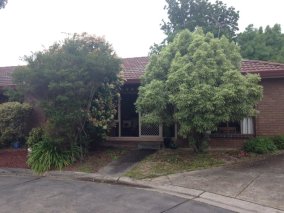
This property is a simple one bedroom unit in a complex of 12 units. It’s in a well established suburban area which is well regarded and in the same city as my first example. The area again demonstrates good infrastructure and is close to necessary facilities (shops, hospitals, schools etc). 

On face value the unit appears to be well maintained but of course you would want to inspect not only the property itself but also look around the complex and the units around it. It is for sale for $142,500 and is returning a healthy $190/week. Let’s say that it ticks the boxes as far as the quality and standard of the complex and we manage to get a realistic offer of $140k accepted. What do the figures look like and is it affordable?

How Much Will It Cost Me?
 Property Price – $140,000 Deposit (10%) – $14000 Mortgage – $126,000
Stamp Duty – $3470 Interest Rate – 4.69%
Conveyancing – $800
Mortgage Insurance – $1800
Total Costs (estimated) $20070

Once again, these are the main costs with a deposit of 10%, if you can get to 20% for a deposit the mortgage insurance disappears and the total estimated cost would then be $32,270. So you could get this property for an initial outlay of between $20,070 and $32,270. This is all great but let’s once again look at how you maintain this. Rather than being overly conservative, this time I’ve gone with one of the better interest rates that I can find at the moment of 4.69%

How Much Will It Cost To Service?
 Loan Amount
– $126,000/$112,000
Council Rates – $900 Rent Income – $190/wk
 Interest Rate – 4.69% Water Rates – $900
 Repayments/Wk (10% deposit)
– $150.50
Body Corp – $800
 Repayments/Wk (20% deposit)
– $134.00
Property Mgmt. – $700
 Yearly Repayments – $7826/6968 Yearly Costs – $3300  Rent/Yr – $9880

For a 1 bedroom unit the rent is very good and in a tight rental market this is becoming increasingly realistic. If you started with the 10% deposit you would find yourself out of pocket $1246 a year (or $24 a week). If you managed to pull together the 20% deposit you would be out of pocket $388 a year or less than $7.50 a week! A dollar a day really is loose change! Come tax time and factoring in some depreciation I’d think it could even be likely to end up being cost neutral.

Again remember this is a ‘one moment in time’ scenario and things can change, but even with some unforeseen expenses and the odd maintenance request a property like this has the potential to be a great starter for an investment portfolio!

Renovating Housing Policy

mza_8623053361525323846.170x170-75The Grattan Institute was formed in 2008 as an ‘independent think tank’ intended to develop public policy for Australia. This week there has been a lot of media commentary about a publication by the institute addressing housing policy in Australia. Renovating Housing Policy was published on October 20th and states:

This report looks at our complex housing system as a whole. By quantifying the major government outlays on the private housing system, it reveals the cumulative impact of housing policies both on individual choices of where and how to live, and on productivity and inequality in our cities.

The initial part of the report examines some fascinating trends and demographics related to home ownership in Australia, there is interesting data presented on the change in home ownership rates over the last 100 years as well as examination of current ownership rates by age as well as earnings. It then continues on to look at renting in Australia and it is from here that the information presented starts to become increasingly relevant to property investors. There is also significant focus within the report looking at the different government support provided to property owners versus those who rent a home. The report states that support for residential property investors costs $6.8 billion a year,or about $4,500 per year for each investor household. If you want to skip to the really interesting part though I’d suggest heading straight to page 36 where the recommendations commence. There are three main recommendations looking at stamp duty and property tax, reform of tax incentives for property investment and also reform of the private rental sector.

Whilst I certainly don’t agree with all of the proposals there appears to be some strong evidence available to support the statements being put forward. What I have found interesting is the way that it has been portrayed in a range of media and particularly the comments that have been posted by readers. I’d be eager to hear people’s thoughts on this as it would have a significant impact on property investors should these recommendations be put into practice. Don’t be afraid to comment below! Click here to read the article.

You can also check out some of the following media articles, don’t forget to check the reader’s comments, it’s certainly stirred up some debate!

The Age property section – Domain

ABC News

The Herald Sun

Business Spectator

Your Investment Property Magazine

Taking your first step – Doing the sums!

I was reading recently that less than 8% of the Australian population are property investors which equates to about 1.8 million people. Of these, the Australian Tax Office reported that 72% of these investors (or around 1.3 million) own just one property. There is a steep drop to less than 100,000 people that own more than 3 properties and less than 1% of Australian property investors (about 15,000 people in the entire country) own more than 6 properties. This information not only shows how few people manage to develop a large property portfolio but also that there is a huge proportion of people that never even get their foot on the ladder. Of course property investing is not everyone’s cup of tea but I have spoken with many people just wanting to make a start but possibly not feeling prepared to take the leap of faith. Today I was speaking with a family member who was interested in learning more about the steps to take to get on the investment ladder. I mapped out a basic example of what I would consider a great ‘starter’, something quite similar to what I started with on my first investment and also an investment which won’t break the bank to get you started. Let’s take a look.
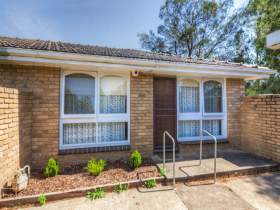
mainThe property I chose to demonstrate with was a one bedroom unit currently for sale in a regional city of around 100,000 people. It is serviced well with good infrastructure and is close to necessary facilities (shops, hospitals, schools etc). The location is highly desirable and the unit itself appears to be in excellent condition. It is for sale for $145k – $155k. Let’s say that we manage to get an offer of $145k accepted, what do the figures look like and is it affordable?

How Much Will It Cost Me?
 Property Price – $145,000 Deposit (10%) – $14500 Mortgage – $130500
Stamp Duty – $3700 Interest Rate – 5.5%
Conveyancing – $800
Mortgage Insurance – $1800
Total Costs (estimated) $20800

These are the main costs with a deposit of 10%, if you can get to 20% for a deposit the mortgage insurance disappears and the total estimated cost would then be $33,500. So you could get the property for an initial outlay of between $20,800 and $33,500 but what then? How are you going to service the loan and how much is it going to cost out of your own pocket?

How Much Will It Cost To Service?
 Loan Amount – $130,500 Council Rates – $900 Rent Income – $200/wk
 Interest Rate – 5.5% Water Rates – $900
 Weekly Repayments – $171 Body Corp – $800
  Property Mgmt. – $728
Yearly Repayments – $8892 Yearly Costs – $3328  Rent/Yr – $10400

The rent on this property is very healthy and over the course of the year you would be out of pocket $1820 (or $35 a week). Remember that this is a ‘one moment in time’ scenario and things can change in both positive and negative ways. The interest rate above is fairly conservative currently, I could locate a deal at 4.69% which would reduce your weekly repayments to $156 meaning you’re now only out of pocket $20 a week! If you managed the initial 20% deposit at that interest rate then your repayments drop to $139/week which means you would have to dig between the couch cushions once a week to find the spare $3 to fund your investment property!

On the flip side you also need to be aware that tenants can move out, things can break that need repairing and the cost of rates, insurance and property management can (and usually do) go up. It would be great to only have to pay $3 a week but in reality it will sometimes be more than that. Can I afford $20, $50 or even $100 a week if it came to that? These are all questions that you need to ask yourself and factor into your own budget. Overall though, what I’m hoping is that this example shows that you don’t need to be a millionaire to start on the investment ladder. Yes it takes some saving but it’s property and you don’t get it for free. When you do the sums though it can often work out to be a lot less than you may have initially thought!

Capital Growth: A Family Case Study

1You will hear a lot about capital growth when you are looking at properties to buy for investment and it’s often used as a selling tactic from agents to highlight attractive elements of a property. It’s something to make sure that you are aware of as although it is a key element that you should consider, it is important to do your own research when it comes to evaluating the capital growth of properties (and the areas they are located in). Capital growth is basically the increase in value of your property (or portfolio) over time and is an element that you should consider alongside the property’s yield (which is the amount of income divided by the amount borrowed against the asset, which I’ll discuss in  a later post). No agent has a crystal ball that can predict future capital growth no matter how much they might want to make you believe they can see into the the future. Commonly, agents and property commentators state that a property will double in value every 7-10 years. In an ideal financial climate this can be the case but it’s dependent on a huge variety of things such as employment rates, local development, government investment and desirability of the area to name just a few. Take a look at my post on Detroit so see an extreme example of where these factors come into play to the detriment of capital growth.

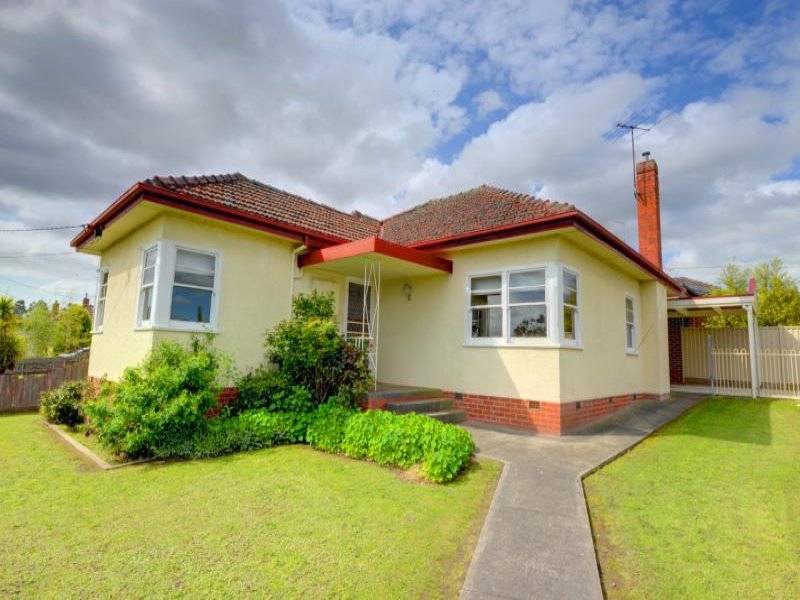
If you are familiar with an area over a lengthy period of time you can often start to develop your own understanding of the capital growth likely for properties in the region. An example that I would like to share came to my attention this week with the listing of the house that belonged to my grandparents (and was built by my grandfather!). Having spent a considerable amount of time in this house myself and literally living around the corner from it for 18 years I certainly know this area well. This property was sold around 15 years ago for less than $100,000 AUD which was a typical price for a property of it’s type at the time (a bargain price in anyone’s books nowadays!) Since then the property has only had one owner and has also been subdivided with another house being built on the rear yard and subsequently sold off. The original property is now for sale for $248,000 AUD which sits perfectly with the theory of doubling in value every 10 years (and probably then some considering that the block it is on is only now half the size). It’s a good example of becoming familiar with an area and I’d strongly recommend that even when you are not at the stage of buying that you keep an eye on the progress of prices in an area that you are interested in. It’s a fascinating exercise and also can help you to be suitably informed when dealing with agents in the future.

Whilst this post is about the basic principle of capital gain I just cannot resist a walk down memory lane with such a familiar property. Feel free to stop reading here but if you like some good historic before and afters the photos below will be interesting.

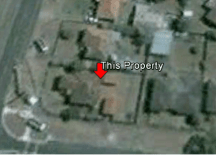
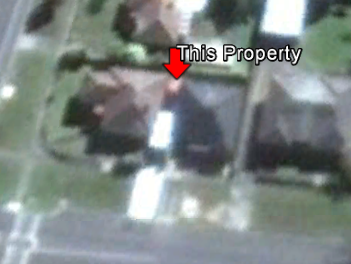
Below are the before and after satellite views of the property (2006 & 2012)

These pictures show the subdivision and subsequent new house built on what was formerly the back yard. Being situated on a corner, properties such as this are often in demand from those that can see the value in utilising such a large backyard for further development.

12

…………………

And before and after photos from 5years ago (thanks to my parent’s wedding album!)

When looking through the current pictures it’s interesting to see that the only major internal change is the removal of much of the original carpeting and polishing the floorboards. It certainly gives a more modern look but the kitchen and bathroom are still original. Considering this, this capital growth is still very good!

This slideshow requires JavaScript.

Tip 3 – What do you want to achieve?

thinkingWhen considering investing in property it’s essential to think carefully about why you are doing it and why you are choosing to invest in property over any other options. There is a lot of media coverage in many countries about the process and benefits of property investing and it’s certainly encouraging to a lot of people, however there are many questions that you should be asking yourself before heading down that path. One of the things I talk to people a lot about is to be ‘cautiously receptive’ of other people’s advice (including mine as well) and when you start telling people that you are thinking about buying an investment property you’ll be surprised at how many people have an opinion on it and plenty of advice to go along with it.

Ultimately, you are the only one that can decide if it’s the right option for you and your circumstances and this requires every potential investor to hold up a mirror and ask themselves some questions. Here are a few prompts that I found (and still continue) to find useful when considering buying a property for investment.

  • What do I want to get out of investing in property? Am I approaching this as a long term investment that I’m happy to maintain for years to come, or am I dong this for some fast returns?
  • Am I aiming to establish a portfolio of properties or am I going to buy one property for investment? If I’m aiming for multiples, how do I do that?
  • Do I want my investments to eventually be my primary income? Am I aiming to have it as a ‘retirement fund’ or eventually extra spending money?
  • Will I be disappointed if it takes a long time for me to see some positive cash flow from my investment? What if it starts off losing money?
  • Examining my finances, am I in a position to invest in property…realistically? Have I been putting off investing because I think I may not be able to do it financially?
  • Do I want a ‘set and forget’ investment or am I prepared to put time and energy into my investments? I think this question is very important to be able to answer as property can end up being either of those things.
  • How much do I know about being a landlord and how much time am I prepared to put into the process of learning about it?
  • Am I realistic about how I would manage if something goes wrong? What about if my income drops, if my family circumstances change, if I need to pay for major repairs or if I have issues with a tenant?

These questions are just a starting point for things to think about and all before you have been to an open for inspection. Often the first thing people will do when thinking about property investment is to go looking at properties and quickly fall in love with their dream investment. My view is that this can often be the first mistake in a long line of potentially costly steps. Remember, this is an investment and you need to be clear about what you want to achieve before you find yourself signing a contract of sale! Yes, it’s not the exciting part but it is essential. Being clear about your goals through investment will be one of the best first steps you can take and will certainly help pave the way for a successful journey. Try not to be put off by it, sometimes it’s challenging to put the brakes on and ask yourself such questions and you also need to be prepared to deal with your answers. If you don’t like what the answers are then it means that you need to do some more work before you get out there buying a property. It’s entirely worth it though so persevere!

If you are starting to think about investing or already are, what are the questions that you would recommend? What have you found useful to consider? Add them below!

Tip 2 – Become a Student!

learnOne of the things that you will find when you start investigating property investment is that there is a huge amount of information out there for you to digest. A lot of it is good and it’s great to know that there really are people willing to share their own knowledge to help you learn, alternatively there are also people willing to put out information that can unfortunately be misleading or are trying to make a quick dollar from the uninformed. The only way to know what to do is to learn it and frustratingly this takes patience. I’m a big believer that property investment is a journey and that it takes time, a lot of time. If you’re expecting to make big money quickly through buying and selling property for a profit then you’re heading more along the lines of property speculating rather than property investing. Some people may argue with me and that’s OK, I certainly won’t disagree that some people have made their fortunes out of speculating, but it’s not what this blog is about. This blog is about discussing the elements that you need to invest for the long term and to set yourself up for a prosperous future. The first step for most of us will be to accept that to do it we’ll need to ‘become a student’ again and go back to the books.

When I started out thinking about buying a property for investment I can freely admit that I knew absolutely nothing about what to do or how to go about it. Years later I’d like to think that I know a whole lot more and that this knowledge has put me in a much better position to manage and continue to improve my portfolio. That being said I’ve also come to understand that I will never know it all nor should I expect to. The property investor that thinks they know everything that there is to know is entering dangerous territory. So I guess you could say that the first lesson I learnt is that to do it well I needed to learn how to do it. If you are starting the journey then you’ll also need to figure out how to learn more about the ins and outs of investing. Being well informed is the best tool that you can have when starting out and you need to commit to developing this knowledge. As they say – A fool and his money are soon parted – becoming informed will make property investing an enjoyable and much less stressful pursuit and will hopefully help you avoid becoming the proverbial ‘fool’.

Once you start on your path to learning all about it you’ll quickly realise that there are huge amount of resources out there to digest and that it can be confusing. You’ll come across books, magazines, websites, blogs, conferences, seminars, clubs and organisations just to name a few. One of the ways I tend to approach all of this information is to sift it out by asking myself “What’s in it for the person giving me this advice?”. I started off by reading books, lots of books. Whilst some of the information was confusing and contradictory, I felt that for the most part, all the author of the book had to gain was the money from me buying the book. On the other hand, it takes a lot to get me to sign up for a seminar being run by a business spruiking the wonders of property investing. yes I’m cynical but I think a healthy dose of it in investing is a good thing. Also realise that you’ll be learning a new language. It took me a long time to start to understand the words and phrases used in property and I’m still learning. Try not to be put off by this however, it comes with time.

So if you’re just starting out, start out by becoming informed. Commit yourself to learning as much as you can and you’ll be giving yourself a great footing for a rewarding journey in property investing. If you are not willing to put in the time to learn about the ‘how to’ then I’d suggest that you might consider something else, as I’m sure that for every successful and well informed investor there are as many, if not more, that went into things uninformed and have come off second best. One useful place to start is to investigate the resources page where I’ll highlight some of the things that helped me start my journey. Whilst I found many of them useful you may not, keep looking and you’ll be sure to find the information that works for you.